
Note 01
Read the finish, not just the shape.
Good handmade candy quality is specific to the sweet. A satin ribbon and a matte piece of fudge can both be beautifully made. Look first for the texture the confectioner intended.
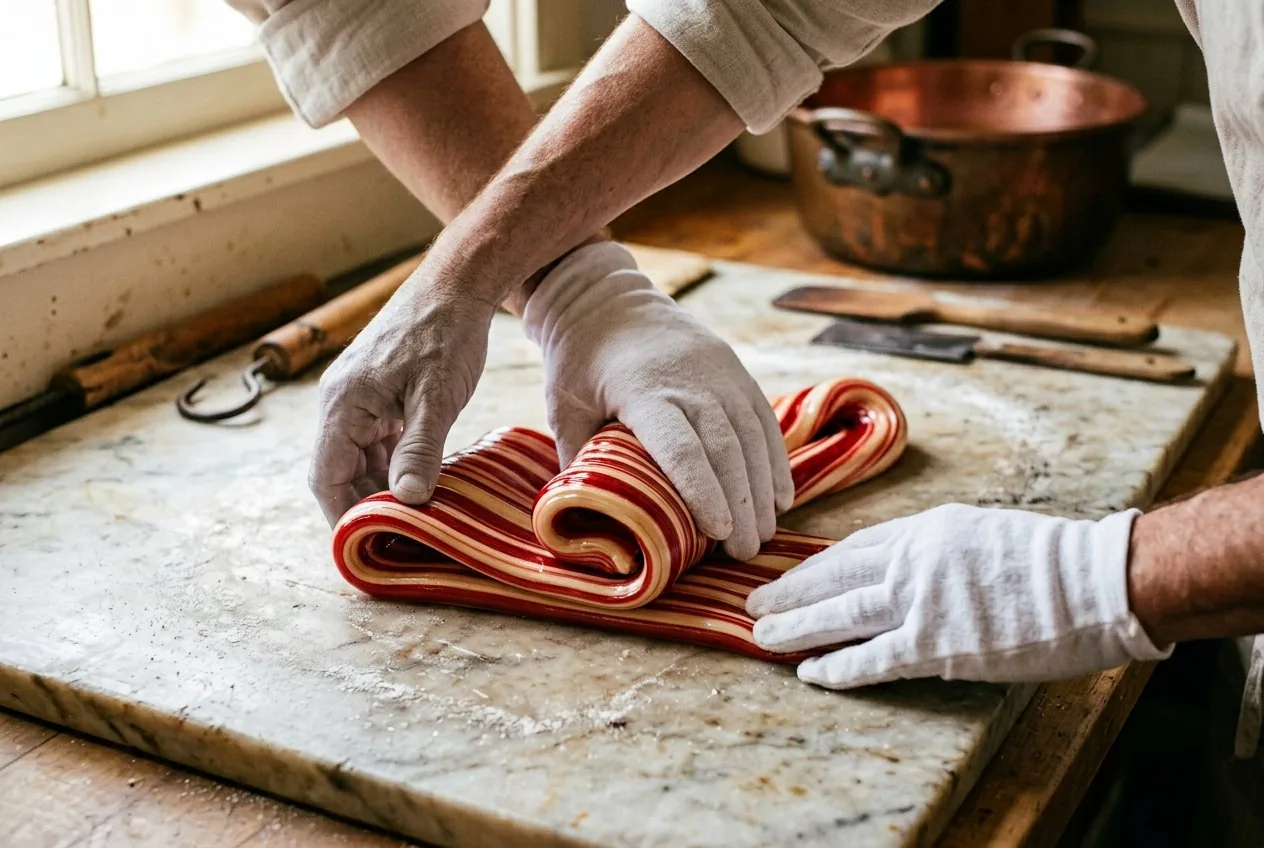
- Pulled sugar ribbons
- Narrow bands follow the folds. Tiny air pockets give the pulled portions their sheen; small differences in the width of each loop are part of the handwork.
- Hand-cut caramels
- Look for a smooth interior and a square that holds its shape with slightly yielding edges. A wax-paper wrapper should peel away without taking most of the piece with it.
- Fine-grained fudge
- A close, soft crumb is different from coarse sugar crystals. Chocolate walnut fudge should reveal its walnuts clearly across a clean cut face.
- Molded maple leaves
- Pure maple sugar candy has a fine crystalline structure. The little veins reflect the mold, while the interior should feel delicate rather than glassy.
Note 02
Give each texture its own space.
Use this candy storage guide alongside the maker’s batch label. Recipes, humidity, and packaging all change how a candy keeps, so a single shelf-life promise would tell you very little.
- Ribbon candy care
- Keep the folds dry in a tightly closed container. Separate layers with food-safe paper and leave enough room that the lid does not press on the ribbons.
- Peanut brittle storage
- Use an airtight tin in a cool, dry cupboard. Moisture softens the sugar sheet, so keep brittle away from steam, a sunny windowsill, and unwrapped chewy sweets.
- Caramel storage & taffy
- Keep pieces individually wrapped and away from heat. Follow the maker’s directions if a particular cream caramel calls for refrigeration.
- Fudge & maple candy
- Wrap the exposed face of a fudge slab and protect molded leaves from pressure. Retain the original batch label and its storage directions.
Note 03
Set a small candy dish.
Bring out a few pieces rather than the entire collection. A dry saucer suits a brittle shard; a shallow dish supports ribbon candy without burying its folds. Leave taffy and butter caramels in their wax-paper wrappers until the moment of tasting.
For a candy sampler, move from a quiet flavor to a more assertive one: pure maple, then salted butter, with peppermint last. Use separate inner packages in a candy gift tin so strong aromas and moisture stay with their own sweets.
Keep candy tasting notes simple: name the first flavor, describe the break or pull, then notice what lingers.
Note 04
Read the maker’s ingredient label.
The directory describes heritage candy styles, not fixed recipes. Confectionery ingredients vary between kitchens. Caramels and fudge commonly contain milk; peanut brittle contains peanuts; walnut fudge contains tree nuts. Taffy can include milk, soy, or egg, depending on the recipe.
Check the actual package for ingredients and allergen information each time. When a label is incomplete, ask the maker about the recipe and shared equipment before serving a piece to someone with a food allergy.
Explore Collection Specs